

CAUTION : Try solving the problem yourself for at least 5–10 minutes before clicking the AI Assistant. In the exam hall, you will be on your own.
Q.No:1 CSIR Dec-2014
Binomial theorem in algebra gives \((1+x)^n=a_0+a_1 x+a_2 x^2+......+a_nx^n\), where \(a_0, a_1, ......, a_n\) are constants depending on \(n\). What is the sum \(a_0+a_1+a_2+...+a_n\)?
(1)
\(2^n\)
(2)
\(n\)
(3)
\(n^2\)
(4)
\(n^2+n\)
Check Answer
Option 1
Q.No:2 CSIR Dec-2014
If \(n\) is a positive integer, then
\[
n(n+1)(n+2)(n+3)(n+4)(n+5)(n+6)
\]
is divisible by
(1)
\(3\) but not \(7\)
(2)
\(3\) and \(7\)
(3)
\(7\) but not \(3\)
(4)
neither \(3\) nor \(7\)
Check Answer
Option 2
Q.No:3 CSIR Jun-2015
The rank-2 tensor \(x_{i}x_{j}\), where \(x_{¡}\) are the
Cartesian coordinates of the position vector in three dimensions, has 6 independent elements. Under rotation, these 6 elements decompose into irreducible sets (that is, the elements of each set transform only into linear combinations of elements in that set) containing
(1)
4 and 2 elements
(2)
5 and I elements
(3)
3, 2 and 1 elements
(4)
4, 1 and 1 elements
Check Answer
Option 2
Q.No:4 CSIR Jun-2016
The radius of convergence of the Taylor series expansion of the function \(\frac{1}{\cosh{(x)}}\) around \(x=0\), is
(1)
\(\infty\)
(2)
\(\pi\)
(3)
\(\frac{\pi}{2}\)
(4)
\(1\)
Check Answer
Option 3
Q.No:5 CSIR Jun-2016
The Gauss hypergeometric function \(F(a, b, c; z)\), defined by the Taylor series expansion around \(z=0\) as \(F(a, b, c; z)=\)
\[
\sum_{n=0}^{\infty} \frac{a(a+1)\cdots (a+n-1)b(b+1)\cdots (b+n-1)}{c(c+1)\cdots (c+n-1)n!} z^n,
\]
satisfies the recursion relation
(1)
\(\frac{d}{dz} F(a, b, c; z)=\frac{c}{ab} F(a-1, b-1, c-1; z)\)
(2)
\(\frac{d}{dz} F(a, b, c; z)=\frac{c}{ab} F(a+1, b+1, c+1; z)\)
(3)
\(\frac{d}{dz} F(a, b, c; z)=\frac{ab}{c} F(a-1, b-1, c-1; z)\)
(4)
\(\frac{d}{dz} F(a, b, c; z)=\frac{ab}{c} F(a+1, b+1, c+1; z)\)
Check Answer
Option 4
Q.No:6 CSIR Jun-2016
A part of the group multiplication table for a six element group \(G=\{e, a, b, c, d, f\}\) is shown below. (In the following \(e\) is the identity element of \(G\).)


(1)
\(x=a, y=d\) and \(z=c\)
(2)
\(x=c, y=a\) and \(z=d\)
(3)
\(x=c, y=d\) and \(z=a\)
(4)
\(x=a, y=c\) and \(z=d\)
Check Answer
Option 4
Q.No:7 CSIR Dec-2016
The resistance of a sample is measured as a function of temperature, and the data are shown below.


The slope of \(R\) vs \(T\) graph, using a linear least-squares fit to the data, will be
(1)
\(6 {\Omega/{}^{\circ}C}\)
(2)
\(4 {\Omega/{}^{\circ}C}\)
(3)
\(2 {\Omega/{}^{\circ}C}\)
(4)
\(8 {\Omega/{}^{\circ}C}\)
Check Answer
Option 2
Q.No:8 CSIR Dec-2017
Consider the real function \(f(x)=1/(x^2+4)\). The Taylor expansion of \(f(x)\) about \(x=0\) converges
(1)
for all values of \(x\)
(2)
for all values of \(x\) except \(x=\pm 2\)
(3)
in the region \(-2< x< 2\)
(4)
for \(x> 2\) and \(x< -2\)
Check Answer
Option 3
Q.No:9 CSIR Dec-2017
Consider an element \(U(\varphi)\) of the group \(SU(2)\), where \(\varphi\) is any one of the parameters of the group. Under an infinitesimal change \(\varphi\to \varphi+\delta \varphi\), it changes as \(U(\varphi)\to U(\varphi)+\delta U(\varphi)=(1+X(\delta \varphi))U(\varphi)\). To order \(\delta \varphi\), the matrix \(X(\delta \varphi)\) should always be
(1)
positive definite
(2)
real symmetric
(3)
hermitian
(4)
anti-hermitian
Check Answer
Option 4
Q.No:10 CSIR Dec-2019
Consider the set of polynomials \(\{x(t)=a_0+a_1 t+\cdots +a_{n-1}t^{n-1}\}\) in \(t\) of degree less than \(n\), such that \(x(0)=0\) and \(x(1)=1\). This set
(1)
constitutes a vector space of dimension \(n\)
(2)
constitutes a vector space of dimension \(n-1\)
(3)
constitutes a vector space of dimension \(n-2\)
(4)
does not constitute a vector space
Check Answer
Option 4
Q.No:11 CSIR Dec-2019
The fixed points of the time evolution of a one-variable dynamical system described by \(y_{t+1}=1-2y_t^2\) are \(0.5\) and \(-1\). The fixed points \(0.5\) and \(-1\) are
(1)
both stable
(2)
both unstable
(3)
unstable and stable, respectively
(4)
stable and unstable, respectively
Check Answer
Option 2
Q.No:12 CSIR Jun-2020
Two time dependent non-zero vectors \(\vec{u}(t)\) and \(\vec{v}(t)\), which are not initially parallel to each other, satisfy \(\vec{u}\times \frac{d\vec{v}}{dt}-\vec{v}\times \frac{d\vec{u}}{dt}=0\) at all time \(t\). If the area of the parallelogram formed by \(\vec{u}(t)\) and \(\vec{v}(t)\) be \(A(t)\) and the unit normal vector to it be \(\hat{n}(t)\), then
(1)
\(A(t)\) increases linearly with \(t\), but \(\hat{n}(t)\) is a constant
(2)
\(A(t)\) increases linearly with \(t\), and \(\hat{n}(t)\) rotates about \(\vec{u}(t)\times \vec{v}(t)\)
(3)
\(A(t)\) is a constant, but \(\hat{n}(t)\) rotates about \(\vec{u}(t)\times \vec{v}(t)\)
(4)
\(A(t)\) and \(\hat{n}(t)\) are constants
Check Answer
Option 4
Q.No:13 CSIR Feb-2022
The volume of the region common to the interiors of two infinitely long cylinders defined
by \(x^2+y^2=25\) and \(x^2+4z^2=25\) is best approximated by
(1)
\(225\)
(2)
\(333\)
(3)
\(423\)
(4)
\(625\)
Check Answer
Option 2
Q.No:14 CSIR Sep-2022
The value of an integral \(\int_0^\infty dx\hspace{0.5mm} e^{-x^{2m}}\), where \(m\) is a positive integer, is
(1)
\(\Gamma (\frac{m+1}{2m})\)
(2)
\(\Gamma (\frac{m-1}{2m})\)
(3)
\(\Gamma (\frac{2m+1}{2m})\)
(4)
\(\Gamma (\frac{2m-1}{2m})\)
Check Answer
Option 3
Q.No:15 CSIR Sep-2022
The infinite series \(\sum_{n=0}^\infty(n^2+3n+2)x^n\) evaluated at \(x=\frac{1}{2}\), is
(1)
\(16\)
(2)
\(32\)
(3)
\(8\)
(4)
\(24\)
Check Answer
Option 1
Q.No:16 CSIR Dec-2023
The Beta function is defined as \( B(x,y) = \int_0^1 t^{x-1} (1 - t)^{y-1} \, dt \).
Then \( B(x, y + 1) + B(x + 1, y) \) can be expressed as
1) \( B(x, y - 1) \)
2 ) \( B(x + y, 1) \)
3) \( B(x + y, x - y) \)
4) \( B(x, y) \)
Check Answer
Option 4
Q.No:17 CSIR Dec-2023
The regular representation of two nonidentity elements of the group of order 3 are given by
1)
\(
\begin{pmatrix}
0 & 1 & 0 \\
1 & 0 & 0 \\
0 & 0 & 1 \\
\end{pmatrix}
\cdot
\begin{pmatrix}
0 & 0 & 1 \\
0 & 1 & 0 \\
1 & 0 & 0 \\
\end{pmatrix}
\)
2)
\(
\begin{pmatrix}
1 & 0 & 0 \\
0 & 0 & 1 \\
0 & 1 & 0 \\
\end{pmatrix}
\cdot
\begin{pmatrix}
0 & 1 & 0 \\
1 & 0 & 0 \\
0 & 0 & 1 \\
\end{pmatrix}
\)
3)
\(
\begin{pmatrix}
0 & 0 & 1 \\
1 & 0 & 0 \\
0 & 1 & 0 \\
\end{pmatrix}
\cdot
\begin{pmatrix}
0 & 1 & 0 \\
0 & 0 & 1 \\
1 & 0 & 0 \\
\end{pmatrix}
\)
4)
\(
\begin{pmatrix}
0 & 0 & 1 \\
0 & 1 & 0 \\
1 & 0 & 0 \\
\end{pmatrix}
\cdot
\begin{pmatrix}
0 & 0 & 1 \\
1 & 0 & 0 \\
0 & 1 & 0 \\
\end{pmatrix}
\)
Check Answer
Option 3
Q.No:18 CSIR June-2024
An integral is given by
\[
\int_{-\infty}^{\infty} dx \int_{-\infty}^{\infty} dy \exp\left[-(x^2+y^2+2axy)\right],
\]
where \(a\) is a real parameter. The full range of values of \(a\) for which the integral is finite, is:
1) \(-\infty < a < \infty\)
2) \(-2 < a < 2\)
3) \(-1 < a < 1\)
4) \(-1 \leq a \leq 1\)
Check Answer
Option 3
Q.No:19 CSIR June-2024
The following four matrices form a representation of a group:
\[
I = \begin{pmatrix} 1 & 0 \\ 0 & 1 \end{pmatrix}, \quad
A = \begin{pmatrix} -1 & 0 \\ 0 & -1 \end{pmatrix}, \quad
B = \begin{pmatrix} 0 & 1 \\ 1 & 0 \end{pmatrix}, \quad
C = \begin{pmatrix} 0 & -1 \\ -1 & 0 \end{pmatrix}
\]
Which of the following represents the multiplication table for the same group?

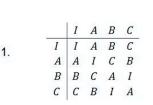

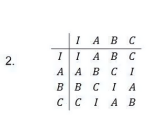


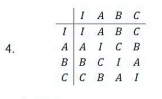
Check Answer
Option d
Q.No:20 CSIR Dec-2024
Given that the sum of the infinite series
\[
\frac{1}{1^4} + \frac{1}{2^4} + \frac{1}{3^4} + \frac{1}{4^4} + \cdots
= \frac{\pi^4}{90},
\]
the sum of the infinite series
\[
\frac{1}{1^4} + \frac{1}{3^4} + \frac{1}{5^4} + \cdots
\]
would be
1) \(\frac{\pi^4}{128}\)
2) \(\frac{\pi^4}{144}\)
3) \(\frac{\pi^4}{120}\)
4) \(\frac{\pi^4}{96}\)
Check Answer
Option 4
Q.No:1 GATE-2012
The number of independent components of the symmetric tensor \(A_{ij}\) with indices \(i, j=1, 2, 3\) is
(A)
1
(B)
3
(C)
6
(D)
9
Check Answer
Option C
Q.No:2 GATE-2013
In the most general case, which one of the following quantities is NOT a second order tensor?
(A)
Stress
(B)
Strain
(C)
Moment of inertia
(D)
Pressure
Check Answer
Option D
Q.No:3 GATE-2013
\(\Gamma\left(n+\frac{1}{2}\right)\) is equal to [Given \(\Gamma(n+1)=n\Gamma(n)\) and \(\Gamma(1/2)=\sqrt{\pi}\)]
(A)
\(\frac{n!}{2^n}\sqrt{\pi}\)
(B)
\(\frac{2n!}{n! 2^n}\sqrt{\pi}\)
(C)
\(\frac{2n!}{n! 2^{2n}}\sqrt{\pi}\)
(D)
\(\frac{n!}{2^{2n}}\sqrt{\pi}\)
Check Answer
Option C
Q.No:4 GATE-2014
The length element \(ds\) of an arc is given by, \((ds)^2=2(dx^1)^2+(dx^2)^2+\sqrt{3}dx^1 dx^2\). The metric tensor \(g_{ij}\) is
(A)
\(\begin{pmatrix}2&\sqrt{3}\\\sqrt{3}&1\end{pmatrix}\)
(B)
\(\begin{pmatrix}2&\sqrt{\frac{3}{2}}\\\sqrt{\frac{3}{2}}&1\end{pmatrix}\)
(C)
\(\begin{pmatrix}2&1\\\sqrt{\frac{3}{2}}&\sqrt{\frac{3}{2}}\end{pmatrix}\)
(D)
\(\begin{pmatrix}1&\sqrt{\frac{3}{2}}\\\sqrt{\frac{3}{2}}&2\end{pmatrix}\)
Check Answer
Option B
Q.No:5 GATE-2016
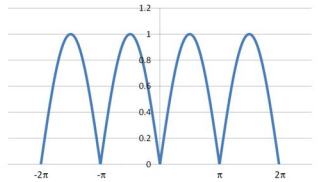
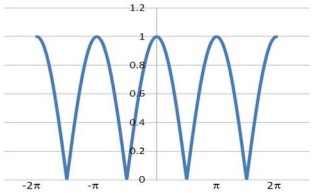
Which of the following curves represents the function \(y=\ln{(|e^{[|\sin{(|x|)}|]}|)}\) for \(|x|<2\pi\)? Here, \(x\) represents the abscissa and \(y\) represents the ordinate.


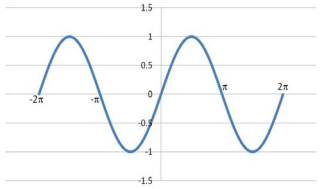


Check Answer
Option C
Q.No:6 GATE-2016
Let \(V_i\) be the \(i^{th}\) component of a vector field \(\vec{V}\), which has zero divergence. If \(\partial_j\equiv \partial/\partial x_j\), the expression for \(\epsilon_{ijk} \epsilon_{lmk} \partial_j \partial_l V_m\) is equal to
(A)
\(-\partial_j \partial_k V_i\)
(B)
\(\partial_j \partial_k V_i\)
(C)
\(\partial_j^2 V_i\)
(D)
\(-\partial_j^2 V_i\)
Check Answer
Option D
Q.No:7 GATE-2018
The scale factors corresponding to the covariant metric tensor \(g_{ij}\) in spherical polar coordinates are
(A)
\(1, r^2, r^2\sin^2{\theta}\)
(B)
\(1, r^2, \sin^2{\theta}\)
(C)
\(1, 1, 1\)
(D)
\(1, r, r\sin{\theta}\)
Check Answer
Option D
Q.No:8 GATE-2020
Let \(u^{\mu}\) denote the \(4\)-velocity of a relativistic particle whose square \(u^{\mu} u_{\mu}=1\). If \(\varepsilon_{\mu \nu \rho \sigma}\) is the Levi-Civita tensor then the value of \(\varepsilon_{\mu \nu \rho \sigma} u^{\mu} u^{\nu} u^{\rho} u^{\sigma}\) is \_\_\_\_\_\_.
Check Answer
Ans 0
Q.No:9 GATE-2022
Two straight lines pass through the origin \((x_0, y_0)=(0, 0)\). One of them passes through the point \((x_1, y_1)=(1, 3)\) and the other passes through the point \((x_2, y_2)=(1, 2)\).
What is the area enclosed between the straight lines in the interval \([0, 1]\) on the \(x\)-axis?
(A)
\(0.5\)
(B)
\(1.0\)
(C)
\(1.5\)
(D)
\(2.0\)
Check Answer
Option A
Q.No:10 GATE-2023
Consider a two dimensional Cartesian coordinate system in which a rank 2
contravariant tensor is represented by the matrix \(\begin{pmatrix}0&1\\1&0\end{pmatrix}\). The coordinate system
is rotated anticlockwise by an acute angle \(\theta\) with the origin fixed. Which one of the following matrices represents the tensor in the new coordinate system?
(A)
\(\begin{pmatrix}0&cos \hspace{1mm} 2\theta\\-sin \hspace{1mm} 2\theta&0\end{pmatrix}\)
(B)
\(\begin{pmatrix}sin \hspace{1mm} 2\theta &cos \hspace{1mm} 2\theta\\cos \hspace{1mm} 2\theta&-sin \hspace{1mm} 2\theta\end{pmatrix}\)
(C)
\(\begin{pmatrix}sin \hspace{1mm} 2\theta &-cos \hspace{1mm} 2\theta\\cos \hspace{1mm} 2\theta&sin \hspace{1mm} 2\theta\end{pmatrix}\)
(D)
\(\begin{pmatrix}sin \hspace{1mm} 2\theta&0\\0&-cos \hspace{1mm} 2\theta\end{pmatrix}\)
Check Answer
Option B
Q.No:11 GATE-2024
\(A^\alpha\) and \(B_\beta\) \quad (\(\alpha, \beta\) = 1,2,3, \(\ldots\), n) are contravariant and covariant vectors, respectively. By convention, any repeated indices are summed over. Which of the following expression is/are tensors?
(A) \(A^\alpha B_\beta\)
(B) \(\frac{A^\alpha B_\beta}{A^\alpha B_\alpha}\)
(C) \(\frac{A^\alpha}{B_\beta}\)
(D) \(A^\alpha + B_\beta\)